Homo erectus Survived in a Chinese Rainforest Until 184,000 Years Ago
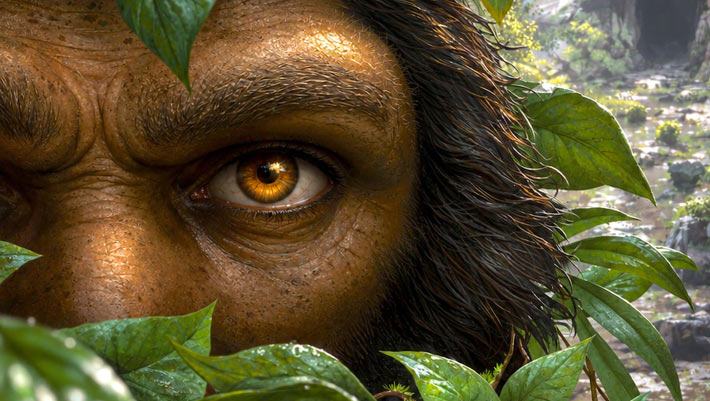
Photo: Garciart / Joannes-Boyau
Homo erectus was one of the longest-lived members of the human family tree, but its story on the Asian mainland was thought to have ended long ago. Nine fossil teeth from two caves in southern China now show otherwise: the species was still living in dense tropical rainforest as recently as 184,000 years ago.
The teeth come from two sister caves, Baxian and Naxian, in the Guangxi region of southern China. Until now, there were no securely dated Homo erectus fossils from mainland Asia younger than about 400,000 years, and the last known members of the species were thought to have lived on the Indonesian island of Java, at Ngandong, dated to between 117,000 and 108,000 years ago. The new finds push the mainland story forward by more than 200,000 years.
Dating the teeth
The dating work was led by Professor Kira Westaway of Macquarie University. The team combined 43 radiometric ages from five different dating techniques, including luminescence dating of the cave sediments and uranium-series dating of the teeth and mineral deposits. Statistical modeling placed the fossils at between 324,000 and 184,000 years ago at Baxian Cave and between 319,000 and 241,000 years ago at Naxian Cave.
These are the youngest reliably dated Homo erectus fossils in China, and the first with firm dating from the south of the country. The species was thought to have largely disappeared from the Asian mainland around 400,000 years ago, so its late survival came as a surprise, said Dr. Frido Welker of the Globe Institute at the University of Copenhagen.
Making sure the teeth are what they seem
Identifying the teeth was a second challenge: fragmentary teeth from this region have sometimes been confused with those of orangutans, so a second study, published alongside the first, set out to settle which species they belonged to.
The team used CT scans to examine the internal structure of the teeth. Eight of the nine matched Homo erectus and differed from Neanderthals, Denisovans and modern humans. Five teeth were also analyzed for ancient proteins preserved in the enamel — a technique that can recover molecular information from fossils too old for DNA. Proteins were recovered from all five, and none showed features unique to orangutans.
Four of the five carried a change in a protein called ameloblastin that had previously been seen only in Homo erectus fossils from China dated to about 400,000 years ago. But they lacked a second change found in those older specimens, which suggests the southern teeth come from a Homo erectus population that had never been sampled at the molecular level before. The protein sequences placed them as an early branch, outside the group containing Neanderthals, Denisovans and modern humans, and showed that four of the individuals were male and one was female.
A tooth that does not fit
One tooth from Baxian Cave, labeled PA1796, did not match anything expected. Its shape was unlike Homo erectus, Neanderthals or modern humans, and its proteins lacked the Homo erectus signature. According to the study, it may belong to a Denisovan — a group known mostly from fossils and DNA in Siberia, Tibet, Taiwan and Laos — or possibly to another population entirely.
As Dr. Welker noted, the team can say with a high degree of confidence that the tooth did not belong to Homo erectus, but cannot yet determine which human species it did belong to — showing that at least two different human groups lived side by side in the region.
Living in the rainforest
The team also reconstructed the environment these people lived in. Carbon isotopes in the tooth enamel of animals from both caves pointed to diets drawn entirely from plants of shaded forest, with no sign of grassland vegetation. Three Homo erectus teeth from Naxian Cave gave a similar signal, at the boundary between dense forest and more open woodland. The animal teeth and the Homo erectus teeth told the same story: these individuals were part of a rainforest ecosystem.
That overturns an old idea: expanding rainforest was thought to have helped drive the last Homo erectus populations to extinction, and only Homo sapiens could make a living in such environments. While our own species adapted to rainforests between 100,000 and 13,000 years ago, this is the first clear, direct evidence of another member of our family living in these habitats. The species was not excluded from rainforest, the team argues, even if it may not have been its ideal habitat.
The teeth also hint at how far these people moved. Strontium isotopes in the enamel of four teeth, which reflect the local rocks where a person lived as a child, varied within individual teeth. The researchers read this as evidence of movement between different geological regions, possibly as far as 250 kilometers away, toward northern Vietnam. These humans were far more mobile than previously recognized, traveling large distances through a complex rainforest landscape.
Why it matters
The findings change how scientists think about Homo erectus — not only when it disappeared, but what it could do. A species long pictured as a creature of open grasslands turns out to have coped with dense tropical forest, traveled widely through it, and shared the landscape with at least one other human group. Understanding how it lived, and eventually why it vanished, is now a more complicated question than it was before.
Source: https://www.sci.news/othersciences/anthropology/homo-erectus-china-15208.html — study published in Nature.


Comments
Post a Comment